The Handler Who Would Not Stop Talking
I was evaluating at Windrush Farm outside Northleach when a handler came in with a Belgian Tervuren that had all the markings of a naturally gifted herding dog. Good structure, alert expression, obvious awareness of the sheep the moment they walked into the yard.
Then the test started, and the handler began issuing commands. Sit. Stay. Come. Leave it. Watch me. Here. Down. A constant stream of obedience instructions delivered with increasing urgency as the dog tried to orient to the sheep.
The Tervuren never had a chance to demonstrate instinct because he never had a moment free from handler interference. Every time his genetics tried to take over, a command pulled him back into trained behavior. We stopped the test, had a conversation, and started again with the handler instructed to say nothing unless safety required it.
The difference was immediate. Released from the barrage of commands, the dog swept around the sheep in a wide arc, dropped into a patrol posture, and began wearing the flock with natural rhythm. Strong pass. But it very nearly went the other way because of handler behavior, not dog behavior.
Handlers make more mistakes during instinct testing than dogs do. After decades of evaluating, I have seen the same errors repeated hundreds of times. Understanding them before your test day gives your dog the best chance to show what they carry.
Mistake One: Over-Handling
The most common and most damaging mistake. Handlers who have invested time in obedience training instinctively revert to managing their dog through commands. The intent is good. They want to prevent problems, demonstrate that their dog is well trained, show the evaluator they are responsible.
But the HIC is not an obedience test. It exists specifically to see what your dog does without direction. Every command you issue suppresses the natural behavior the evaluator is trying to observe.
Why It Happens
Most handlers have never let their dog off the behavioral leash in an unfamiliar environment with exciting stimuli present. The prospect feels dangerous. What if the dog hurts a sheep? What if they refuse to come back? What if they embarrass me?
These fears are understandable but counterproductive. The evaluator is there to manage safety. The long line provides physical control. Your job is to let your dog be a dog in the presence of livestock and observe what happens.
How to Avoid It
Before the test, practice silence during exciting situations. Take your dog somewhere stimulating, a dog park, a busy trail, a field where rabbits run, and simply watch them without issuing commands. Notice how much you reflexively direct their behavior and work on reducing that.
During the test, commit to silence unless the evaluator asks you to intervene or safety genuinely demands it. Clamp your mouth shut if you have to. The evaluator will tell you if they need you to act. Learning what actually happens during HIC testing beforehand reduces the anxiety that drives over-handling.
Mistake Two: Misreading Normal Behavior as Aggression
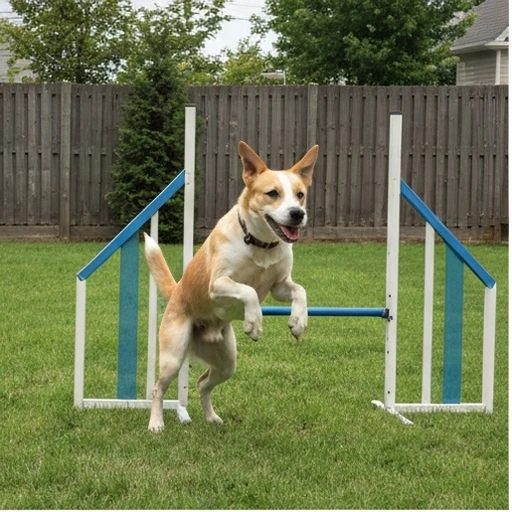
I cannot count how many handlers have pulled their dog away from stock because they thought normal herding behavior was an attack in progress. The intensity of genuine instinct startles people who have never seen it.
A dog dropping into a hard stare looks predatory to the uninitiated. A dog rushing toward sheep looks like an attack. A dog nipping at heels looks like biting. But these behaviors, in context, are exactly what the test exists to evaluate.
The Crouch Is Not Stalking Prey
When your dog drops low, shoulders down, eyes locked forward, they are entering herding posture. Yes, it derives from predatory behavior. That is the entire basis of herding work. Selective breeding took the predatory sequence and modified it into something useful. The crouch you see is the stalking behavior with the kill sequence removed. Understanding how to read body language during testing helps you distinguish instinct from genuine aggression.
Speed Is Not Attack
Some breeds engage livestock at speed. Australian Cattle Dogs, Corgis, and other driving breeds work with urgency that can look alarming. A dog running at sheep is not necessarily trying to harm them. Watch what happens when they reach the stock. Do they slam into the animals, or do they adjust pressure at the last moment? Do they grab and hold, or do they nip and release?
The outcome of the approach tells you more than the speed of it.
Vocalization Is Not Aggression
Barking, whining, or other vocalizations during stock work are normal for many breeds. German Shepherds frequently bark while working. Some dogs whine with excitement when instinct activates. These sounds do not indicate aggression. They indicate arousal and engagement.
Genuine aggression produces different sounds than excited working behavior. The evaluator knows the difference. Trust their judgment rather than your own anxiety.
Mistake Three: Positioning Yourself Badly
Where you stand and how you move in the pen affects your dog’s ability to demonstrate instinct. Many handlers position themselves poorly without realizing the impact.
Crowding the Stock
Handlers who stand too close to the livestock leave no room for their dog to work. The dog needs space between you and the stock to demonstrate balance-seeking behavior, wearing, and approach. If you are standing against the sheep, your dog cannot get between you and the animals to show natural gathering instinct.
Stay near the center of the pen or where the evaluator suggests. Give your dog room to work the perimeter and establish their own position relative to the stock.
Following the Dog
Some handlers chase their dog around the pen, trying to stay close. This turns the exercise into a pursuit rather than an evaluation. Your movement influences your dog’s movement. When you follow them, they keep moving. When you stay planted, they have a fixed reference point to work around.
Let the evaluator guide your positioning. Generally, staying relatively still allows your dog to demonstrate the widest range of instinctive behaviors. Movement should be purposeful and at the evaluator’s direction, not reactive following.
Blocking the Dog’s Path
Nervous handlers sometimes step between their dog and the livestock, physically blocking access. This body block tells your dog that approaching the stock is wrong. It suppresses exactly the behavior you came to evaluate.
If you feel the urge to block, pause and assess why. Is your dog genuinely about to cause harm, or are you reacting to intensity that feels uncomfortable? If the evaluator has not intervened, the situation is likely within acceptable parameters.
Mistake Four: Arriving Unprepared
Physical presence at the test site is not the same as preparation. Handlers who arrive without understanding the process or having their dog in the right state often compromise the evaluation before it starts.
The Car-to-Pen Rush
Dogs need decompression time after travel. A handler who unloads their dog from a three-hour drive and walks straight to the testing pen presents a stressed, overstimulated animal whose behavior reflects travel fatigue rather than herding instinct.
Arrive early. Walk your dog. Let them process the new environment at a distance. Our guide on preparing for your first HIC provides a detailed protocol for test day arrival that prevents this common mistake.
No Recall Foundation
While the test is not about obedience, basic recall provides essential safety margin. Handlers whose dogs have zero recall in exciting environments create dangerous situations when asked to bring their dog back from stock.
You do not need competition-level recall. You need enough response that, combined with the long line, you can regain control when needed. Build this before test day.
Wrong Equipment
Retractable leads that jam, collars that slip over the head, harnesses that restrict natural movement. Equipment problems during testing are surprisingly common and entirely preventable.
Use a flat collar that fits properly and a long line you have practiced with. Leave the retractable lead in the car. If the facility provides equipment, ask about it beforehand so you know what to expect.
Mistake Five: Emotional Interference
Your emotional state broadcasts to your dog with remarkable clarity. Handlers who bring anxiety, excitement, or frustration into the pen contaminate the evaluation with human emotion.
The Anxious Handler
Dogs read human stress through body tension, breathing patterns, voice tone, and chemical signals we cannot consciously control. An anxious handler creates an anxious dog. That anxiety can suppress instinct, increase reactivity, or produce avoidance behavior that has nothing to do with the dog’s natural herding ability.
If you struggle with performance anxiety, practice relaxation techniques before the test. Breathing exercises, progressive muscle relaxation, or simply walking until you feel calm. Your emotional preparation matters as much as your dog’s physical preparation.
The Over-Excited Handler
Handlers who enter the pen buzzing with excitement amp their dogs up beyond productive arousal levels. Over-arousal produces frantic, unfocused behavior that obscures instinct rather than revealing it.
Channel your excitement into quiet observation. You can celebrate afterward. During the test, be a calm anchor that allows your dog to find their own working level.
The Disappointed Handler
Some handlers begin showing disappointment if their dog does not immediately display dramatic instinct. Their body language deflates. Their energy drops. Their dog reads this shift and responds to the handler’s emotional state rather than the livestock.
Commit to neutral engagement for the entire evaluation period. Some dogs need time to warm up. The dog that seems disinterested at minute two might be working beautifully at minute eight, if the handler has not already signaled that something is wrong.
Mistake Six: Comparing to Other Dogs
Testing days often involve multiple dogs evaluated in sequence. Handlers who watch other dogs test before their own slot frequently make unfavorable comparisons that affect their mindset and expectations.
The Border Collie who showed brilliant eye before your German Shepherd’s turn is not the standard against which your dog should be measured. Breeds differ enormously in how instinct expresses, from the intense eye of a Border Collie to the physical grip of a Cattle Dog. Understanding how herding style differs between breeds helps you appreciate that your dog’s approach is not inferior, just different. Your dog’s test stands alone as an evaluation of their individual genetic heritage. Standards organizations like the Herding Instinct Institute develop breed-specific evaluation criteria precisely because direct comparison between breeds distorts results.
If watching other dogs increases your anxiety, step away before your slot. Walk your dog in a quiet area. Return focused on your own experience rather than someone else’s.
The Handler’s Role
Your role during the HIC is simpler than most handlers realize. Show up prepared. Stay calm. Stay quiet. Trust the evaluator. Observe what your dog does without interpreting it through anxiety or expectation.
The test is designed to see your dog, not you. The best thing you can do as a handler is remove yourself as a variable. Be present but neutral. Be available but not interfering. Be supportive without being directive.
Every mistake on this list shares a common root: the handler inserting themselves into a process that should center on the dog. Reduce your footprint in the pen, and you create space for your dog’s instinct to emerge on its own terms.
If despite your best efforts the test does not go well, do not assume the result is final. Handler mistakes are among the most correctable causes of failure, and many teams that stumble the first time produce excellent results on a second attempt. Our guide on retesting after a failed HIC explains how to assess what went wrong and prepare for a more successful evaluation.
That is what the evaluator wants to see. That is what your dog deserves the chance to show.