Choose the activity from the dog in front of you, not from a breed list or a trend. Start with what the dog already offers: how it greets people, how it uses its nose, how it moves, how it recovers after effort. Then match that to your own time, space and handling skills, and pick one practice to try for six to eight weeks before judging it.
Why the dog in front of you matters more than the breed
Two dogs of the same breed can want completely different work. A border collie that stares at leaves may be miserable in a busy agility ring, while a rottweiler that never looks at sheep may be brilliant at scent detection. Breed gives you a range of probabilities, not a plan.
What you can observe is more useful. Watch three things over a normal week:
- Attention: what does the dog choose to look at when nothing is asked? Moving things, smells, people, or you?
- Recovery: after a hard run or a difficult training session, does the dog settle in ten minutes or stay wired for hours?
- Drive to cooperate: does the dog check back with you, or work independently and resent interruption?
These answers point toward a family of activities rather than a single sport. A dog that scans the ground constantly is telling you something about scent work. A dog that leaps onto walls and benches is telling you something about movement. A dog that freezes and watches is telling you something about control and precision.
If you want a structured way to compare those families before committing, a French editorial guide such as choisir une activité canine sets out education, scent, movement and creativity as four directions and asks you to weigh rhythm, age, motivation and health first. That order, dog before discipline, is the one that saves months of frustration.
What does your dog already do well?
Before signing up for anything, run a simple inventory at home and on walks.
Education and socialisation. Can the dog take food near a busy road? Can it hold a sit while a stranger passes? Can it come back from a smell? If the answer is no, a puppy class or a basic manners course is not a delay, it is the foundation every other activity stands on. Recall, a loose leash, waiting, and settling on a mat are the skills that make agility, nosework and dog dance possible at all. Without them, every sport becomes a management problem.
Scent work. Hide a treat in a room and watch. A dog that works the floor systematically, checks corners, and stays with the problem has aptitude for nosework. Scent work suits dogs with limited mobility, reactive dogs who cannot train near others, and older dogs who still want a job. It is also the cheapest activity to start: boxes, a few hides, and a floor.
Movement. Does the dog jump onto things without being asked? Does it turn tightly, accelerate, and recover quickly? Agility and hoopers reward that. Hoopers is done at ground level with hoops and barrels, so it removes jumping and contacts, which matters for dogs with joint concerns or for handlers who cannot run a full course.
Creativity and body awareness. Dog dance asks the dog to move in relation to the handler, often in heel position, with turns, backing up and leg weaves. It suits dogs who like close work and handlers who prefer precision over speed. Mobility and functional movement exercises, done slowly, support all of the above by improving strength and balance.
How do you compare education, scent work, movement and creativity?
Use four filters, in this order.
- Health and age. Ask a veterinarian whether jumping, tight turns or sustained running are appropriate. A dog with hip or spine issues should not be doing repeated jumps, however much it enjoys them. Scent work and ground-level hoopers are usually the safer entry points.
- Motivation. Food, toy or handler-focused? A food-motivated dog learns nosework quickly. A toy-driven dog often takes to agility. A dog that works for praise and closeness is a natural for dance and obedience.
- Handler capacity. Be honest about your own body, schedule and temperament. Agility needs running and course memory. Nosework needs patience and observation. Dance needs timing and repetition. Hoopers needs handling at a distance, which some people find easier than running.
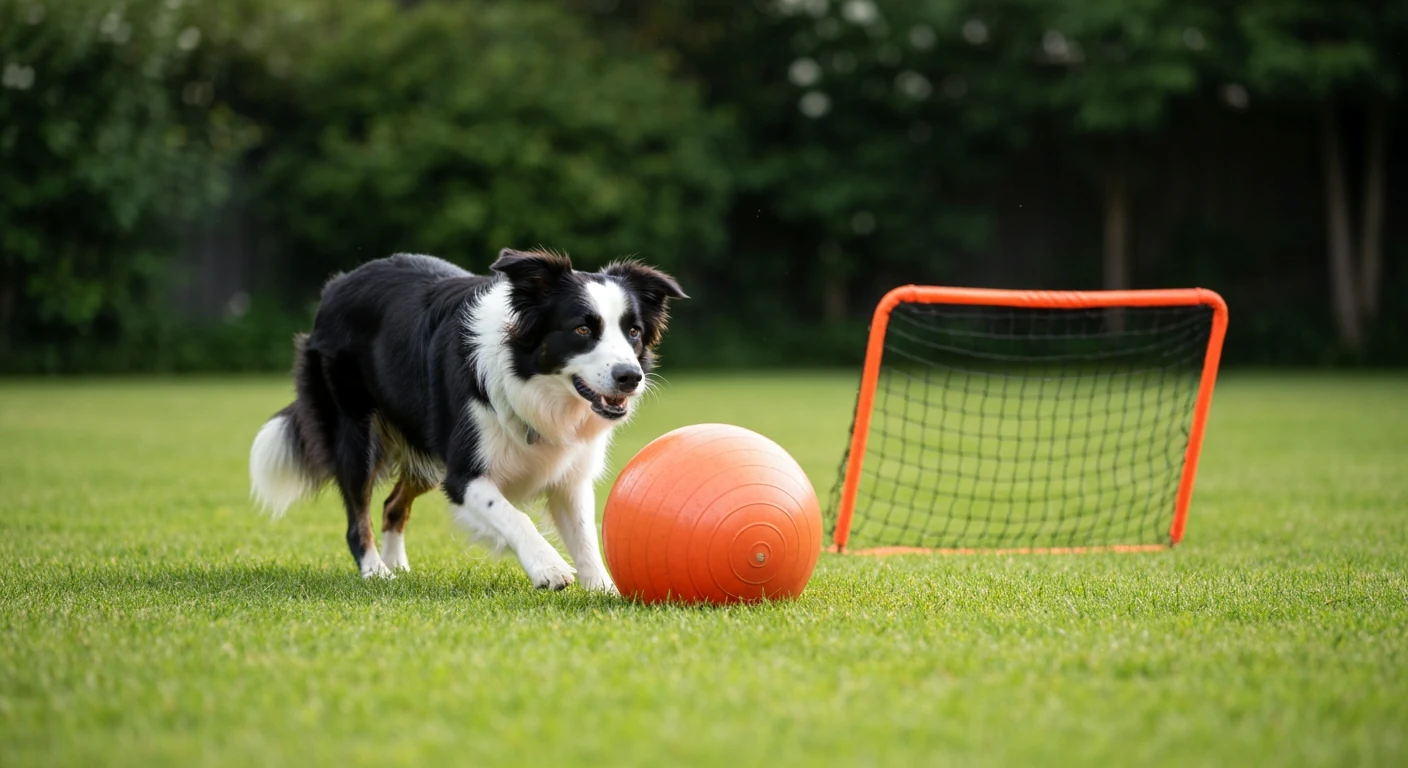
- Practice context. Indoor space, garden, club field, or nothing at all? Nosework and dance can be trained in a living room. Agility cannot. If you have no livestock and no field, that does not rule out herding-type work entirely: treibball and urban herding games use balls and cones to satisfy the same gathering impulse.
Score each activity from one to five on those four filters. The highest total is your first trial, not your lifetime commitment.
What do agility, hoopers, nosework and dog dance actually ask of a dog?
Agility. Asks for speed, jumping, contact obstacles, and the ability to read a handler at distance. Best for sound, high-drive dogs and mobile handlers. Main risk is overuse of jumps in young or unsound dogs.
Hoopers. Asks for the dog to run a sequence of hoops and barrels while the handler directs from a distance. No jumps, no contacts, low physical demand on the handler. Good for dogs with limited jumping clearance and for handlers with knee or back problems.
Nosework. Asks for independent problem-solving with scent. Low physical demand, high mental demand. Excellent for reactive dogs, senior dogs, and dogs who need to work alone rather than with a handler in motion.
Dog dance. Asks for precise, close, cooperative movement: heelwork, spins, backing, weaving. Rewards a dog that likes physical contact and a handler who enjoys choreography and slow refinement.
Each of these has a safety floor. Warm up before jumping. Keep sessions short. Stop when the dog’s form degrades, not when it fails. Watch for the dog choosing to disengage, which is information, not disobedience.
How do you know the activity is working?
Judge by observable behaviour, not by ribbons.
- The dog moves toward the start line, the box, or the mat without being dragged.
- Recovery after a session is normal: eating, drinking, settling.
- The dog offers the behaviour outside training, which shows it has become rewarding in itself.
- You can describe one thing that improved in the last two weeks.
If two of those are missing after six weeks, change one variable: the time of day, the reward, the group size, or the activity itself. Changing activity is not failure. It is the same principle as choosing from the dog in front of you, applied again.
When should you stop or switch?
Stop immediately if you see lameness, repeated refusal, freezing, or a dog that hides when the training bag appears. Those are welfare signals, not training problems.
Switch when the dog is sound and willing but the fit is wrong. A dog that loves scent but shuts down in a group class may thrive in private nosework. A dog that loves movement but cannot jump may thrive in hoopers. A dog that loves closeness but hates speed may thrive in dance.
Keep the education layer running underneath everything. Recall, a loose leash, and the ability to settle are what let you move between activities without starting over. The dog that can wait, come when called, and relax on a mat is welcome in more places, and that flexibility is worth more than any single title.
Choosing an activity for a dog often comes down to matching the dog’s natural drive to a safe outlet, and the same logic applies to any animal in the household. Parrots need enrichment too, and their toys wear in ways that are easy to miss: splintered wood, frayed rope, or a loosened metal clip can turn a harmless perch item into a hazard. Owners who already assess a dog’s temperament before starting a sport will recognize the habit of checking equipment before each session. A short guide to safe chew materials for parrots covers wood, palm, metal, rope, dyes, and when to clean or replace a toy.