
To pass the AKC Herding Test (HT), a dog must hold a controlled pause, move a small group of stock between two pylons with two changes of direction, and finish with a stop followed by a recall, all within ten minutes. The Pre-Trial Test (PT) asks for more: four gate passes, a stop on the course, a stay while the handler opens the pen gate, and the stock penned. Each title needs two passes under two different judges.
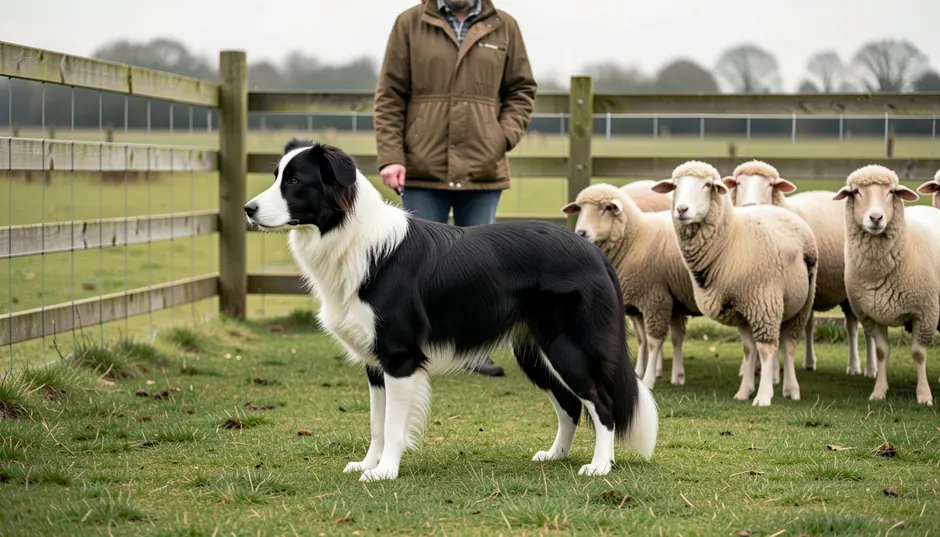
Both levels are judged on a pass or fail basis and sit between the instinct test and the trial classes. The rules below come from the current AKC Herding Regulations, amended to August 2025; each club’s premium list adds local details such as the stock on offer.
Where do the HT and PT sit in the AKC herding ladder?
The AKC describes its noncompetitive tests as a standardized gauge of a dog’s basic instinct and trainability. Chapter III of its regulations covers three of them: the instinct test, the Herding Test and the Pre-Trial Test. At the instinct level the dog works on a long line of roughly 6 to 15 feet, must show a stop and a recall before the line is dropped, and passes if it shows sustained interest in gathering or driving the stock. The AKC issues an Instinct Tested certificate once two different judges have passed the dog at two separate tests.
The Herding Test is the first level with a set course to complete. The Pre-Trial Test is designed for a dog that is not yet polished by training but can work just below the beginning trial level. Then come the trial levels: Started, Intermediate and Advanced. Neither test title is required before entering a trial. If the letters on pedigrees still blur together, our map of who awards which herding titles separates the AKC, AHBA and ASCA programs.
What happens during the AKC Herding Test?
The HT arena measures no less than about 100 by 100 feet (50 by 100 feet for ducks) and no more than about 100 by 200 feet. Two pylons stand on the long centerline, each about 10 feet in from the fence at opposite ends. The stock start freestanding at the top of the arena, although a stock handler may hold them there if the judge decides it is necessary.
You enter with your dog on lead and, once the judge is satisfied it is under control, put it in a sit, stand or down stay and remove the lead. The clock starts then. You may move away to a sensible position relative to the stock, and the judge tells you when to send the dog. A dog that breaks this stay does not fail for that reason alone.
The dog must then show controlled movement of the stock from the first pylon to the second, turn them at or near it, bring them back to the first pylon, turn them again and return to the second. You choose whether to work across the open arena or along the fence. The run ends near the second pylon with a stop, then a recall. The judge may give verbal help but may not interfere with the stock, the dog or the handler.
The regulations list five elements that must all be executed:
- A controlled pause or stop at the beginning.
- A first change of direction at or near the proper pylon, with the stock under control.
- A second change of direction at or near the other pylon.
- A stop.
- A recall at the conclusion of the run.
The time allowed is ten minutes, with no minimum. The timer gives no warning and simply announces when time has expired. Once the dog has attempted every element, pass or not, it leaves the arena; it cannot try a different path or a different herding style.
What does the Pre-Trial Test add?
The PT arena is larger, about 100 by 200 feet at minimum and up to 200 by 400 feet, or about 50 by 100 feet for ducks. Two panels stand at the far narrow end, about 26 feet in from the back wall, each leaving a 12-foot gap to the side wall. Those gaps are the two gates. A pen sits at the top of the arena, and a graze area of up to roughly 30 by 100 feet is marked along one long wall.
The dog moves the stock through the first gate, across the narrow end and through the second gate. Direction reverses at about the midpoint of the long side, and the stock come back through the second gate, across the end, through the first gate and up to the pen. While you open the pen gate the dog must hold a sit, stand or down until told to pen. The test ends when the gate closes. The five PT elements are a stay, controlled passage of the stock through four gates with a change of direction, one stop on the course, one stop while the pen gate is opened, and penning.
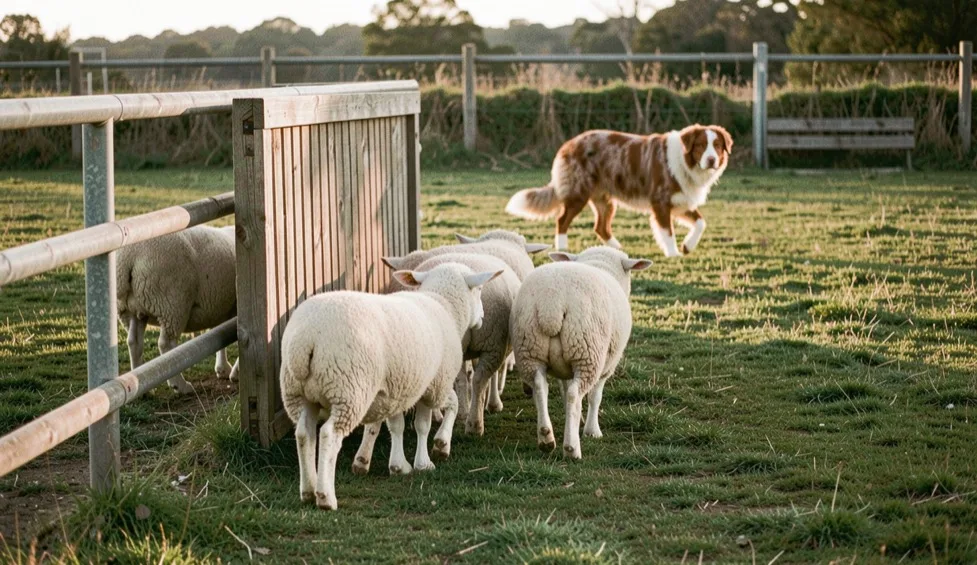
The PT is also stricter about control. A dog that breaks the opening stay does not qualify. Once the stock are moving you may not excessively touch or correct the dog, and it must respond promptly without threatening gestures from you. Retries at the gates and pen are left to the judge’s judgment, limited by the clock and by whether the attempts are getting anywhere. With awkward stock, a dog can still qualify if all but one head go through the gates and into the pen; as a general rule, 80 percent of the stock should be penned.
Clubs may also offer a boundary style PT. There, the dog lifts the stock from beside the pen, holds them in the graze area for no more than three minutes, then reverses the course and returns them through both gates to the pen. You must mark “Boundary” on the entry form.
How do the instinct test, HT and PT compare?
| Point | Instinct test | Herding Test (HT) | Pre-Trial Test (PT) |
|---|---|---|---|
| Minimum age | 6 months | 9 months | 9 months |
| Arena | 50 x 50 to 100 x 100 ft | About 100 x 100 to 100 x 200 ft; 50 x 100 ft for ducks | About 100 x 200 to 200 x 400 ft; 50 x 100 ft for ducks |
| Start | Long line of about 6 to 15 ft | Stay, lead removed | Stay, lead removed |
| Broken start stay | Not applicable | Does not fail on its own | No qualification |
| Course | No set course | Two pylons, two direction changes | Four gate passes, pen |
| Passes needed | 2, under 2 judges | 2, under 2 judges | 2, under 2 judges |
| Entries close | Can be taken on the day | At least 10 days before | At least 10 days before |
Who can enter, and what equipment is allowed?
AKC registered dogs aged nine months or older from breeds accepted into the herding program can enter tests and trials, as can dogs of those breeds enrolled in Foundation Stock Service or the Purebred Alternative Listing. Spayed and neutered dogs may run. Lame, blind or deaf dogs may not, nor may dogs with bandages, stitches or open sores. Bitches in season run at the end of the level. The regulations also expect every dog to have had training and prior exposure to livestock before it is entered.
In tests, dogs wear a simple buckle, snap lock or slip collar; prong collars, electronic collars, muzzles and head collars are not allowed at AKC events. You may carry a staff or crook of up to about five and a half feet, but never PVC pipe, and never to touch the dog unless the safety of a person or the stock is at stake. You may not carry food into the arena.
Test stock are sheep, ducks or cattle, with goats allowed in place of sheep and geese or turkeys in place of ducks when the premium list says so. Sheep and cattle usually come in groups of three to five head; ducks run five at a time.
Why do dogs fail the HT or PT?
The regulations spell out what will not qualify. A dog that chases or harasses the stock, or keeps stopping them from moving in a controlled way, will not qualify. Nor will a dog that simply heels around the course while the stock follow the handler: the judge must see the dog doing the work. Coaching or double handling from outside the arena also means no qualification.
The rest is training. A reliable stay, a stop that holds with stock in motion and, for the HT, a recall are what separate these tests from an instinct run; building them on stock is the work described in our guide to moving from an instinct certificate to Started-level work. On the day, listen closely at the handler’s meeting the judge holds before each level, and walk the course without your dog before the level starts, which the regulations allow. Our comparison of how an instinct test differs from a full herding trial covers the two ends of the path; the HT and PT sit between them.
Frequently Asked Questions
Does a dog need the HT before entering the Pre-Trial Test?
No. The AKC regulations state that a dog need not have earned the Herding Tested title to enter the Pre-Trial Test, although inexperienced handlers are encouraged to work for the HT first. If a dog later earns the PT, that title supersedes the HT.
How long does a dog have to complete the HT or PT?
Ten minutes from the moment the lead is removed, with no minimum time. The timer gives no warning before time runs out, and a dog must complete every test element within those ten minutes to qualify.
Can a dog earn the HT title at a single event?
Yes, in one situation. Each title needs passes under two different judges, but if a club runs the Herding Test in more than one division, a dog may enter more than once and earn the HT at that event by qualifying under two different judges.