
The Puppy Who Was Not Ready
At a spring testing day at Hartwell Farm outside Cirencester, a young couple arrived with a nine-month-old Border Collie they had purchased from respected working lines. Both parents were proven trial dogs, and the pedigree read like a herding hall of fame. The couple was eager to begin their herding journey and wanted certification as quickly as possible.
The puppy entered the pen and immediately began playing. She bounced toward the sheep, bounced away, discovered a particularly interesting patch of mud, returned to the sheep to sniff one, then ran to her handler for reassurance. There was no crouch, no eye, no sustained interest in the livestock beyond momentary puppy curiosity.
They were devastated. I was not.
I told them to come back in four months. When they returned, that same puppy, now thirteen months old, entered the pen and dropped into a stare so intense it stopped the sheep in their tracks. She swept around the flock with the same fluid motion I had seen in her dam years earlier. Strong pass, exactly as I expected.
The dog had not changed. Her genetics were identical at both ages. What changed was her nervous system’s ability to express those genetics through sustained, purposeful behavior rather than juvenile scatter. Timing matters profoundly in instinct testing, and understanding the relationship between age and instinct expression prevents needless disappointment.
How Age Affects Instinct Expression
Herding instinct is genetic. It does not appear at a certain age the way baby teeth fall out at predictable intervals. The programming exists from birth. But the behavioral expression of that programming depends on neurological maturity, hormonal development, and the cognitive ability to sustain focused attention.
The Developing Brain
Puppies are neurologically incomplete. The canine brain continues developing through the first eighteen months of life, with some breeds not reaching full neural maturity until age two or even three. The prefrontal cortex, which governs impulse control and sustained attention, is among the last areas to mature.
Herding instinct requires exactly the skills that immature brains struggle with. Sustained focus on a single stimulus. Controlled movement rather than reactive bursting. Pressure modulation that adjusts to feedback. Spatial awareness that accounts for handler position, stock position, and pen boundaries simultaneously.
A puppy can possess every genetic component necessary for brilliant herding work and still fail an instinct test because the neural architecture to express those components has not finished developing. Understanding what evaluators look for during the HIC makes it clear why these cognitive demands are inherently challenging for young dogs.
Hormonal Influence
Sexual maturity affects behavior in ways that intersect with herding instinct expression. Many handlers notice a shift in their dog’s intensity and focus after reaching sexual maturity, typically between eight and fourteen months depending on breed and size.
Male dogs sometimes show increased drive and confidence after testosterone levels rise. Female dogs may show cyclical variations in intensity related to their reproductive cycle. These hormonal shifts do not create instinct, but they can amplify its expression, making behaviors more visible during testing.
This does not mean intact dogs necessarily test better than altered ones. The relationship between hormones and herding behavior is far more nuanced than simple presence or absence of reproductive hormones. But it does mean that testing during hormonal transition periods can produce inconsistent results that do not reflect the dog’s settled working character.
The Minimum Age Question
Most testing organizations set a minimum age for HIC evaluation, typically between nine and twelve months. This floor exists for good reason, but meeting the minimum does not mean your dog is ready.
Nine Months: The Common Minimum
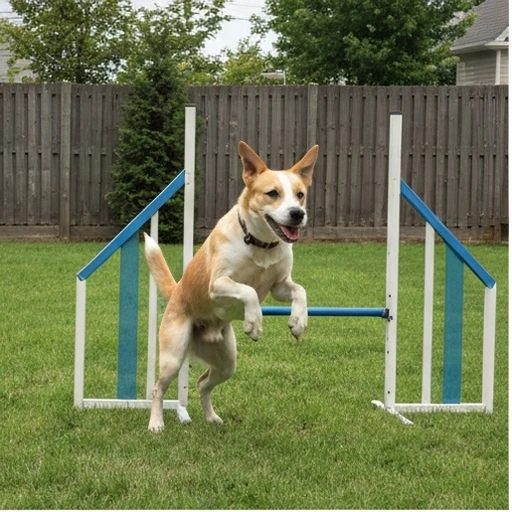
The nine-month minimum reflects a compromise between handlers eager to test and the reality of canine development. At nine months, many dogs can demonstrate basic instinct if it exists at a strong level. But many others are still too immature for reliable evaluation.
Dogs tested at nine months who show strong, unmistakable instinct likely possess significant genetic drive. The instinct is powerful enough to override juvenile tendencies. These dogs would probably pass at any age once the minimum is met.
Dogs tested at nine months who fail or show ambiguous results present a more difficult interpretation. Did they fail because instinct is absent, or because they have not matured enough to demonstrate it? At nine months, you genuinely cannot tell the difference in many cases.
Twelve to Eighteen Months: The Sweet Spot
For most herding breeds, testing between twelve and eighteen months produces the most reliable results. By this age, the majority of dogs have reached sufficient neural maturity to sustain the attention and behavioral control that testing requires.
Dogs in this age range can typically focus on livestock for the duration of a test without deteriorating into play behavior. They have enough impulse control to approach stock deliberately rather than rushing in. They can process handler position and stock movement simultaneously.
This does not mean every dog is ready at twelve months. Large breeds and late-maturing individuals may need more time. But the twelve-to-eighteen-month window offers the best balance between handler impatience and developmental readiness. The preparation strategies for first-time testing become most effective when the dog has reached this developmental stage.
Two Years and Beyond: Late Bloomers
Some dogs do not demonstrate clear instinct until they reach full maturity at two years or older. This is particularly common in breeds with slower development trajectories, including many of the larger herding breeds like Briards, Bouviers, and some German Shepherd lines.
Late-blooming instinct does not indicate weaker genetics. It reflects a developmental timeline that prioritizes other aspects of maturation before allowing full instinct expression. A dog that shows moderate interest at fourteen months may demonstrate powerful, sustained instinct at twenty-four months once their nervous system catches up with their genetic potential.
Testing Puppies: What You Can and Cannot Learn
Some handlers want to evaluate young puppies for instinct, either to inform purchase decisions or to plan training timelines. While formal HIC testing has age minimums, informal instinct assessment can provide useful, if limited, information.
What Puppy Evaluations Show
Between six and eight months, many puppies show fragments of instinct behavior when exposed to livestock or moving objects. You might see brief eye contact with stock, momentary crouching, short bursts of wearing behavior, or intense interest that lasts seconds before dissolving into play.
These fragments suggest the genetic material exists. They do not predict how strongly or how reliably that material will express at maturity. A puppy showing brief eye at seven months might develop into a strong-eyed worker or might plateau at moderate interest. The fragment alone does not determine the trajectory.
What Puppy Evaluations Miss
Young puppies cannot demonstrate the sustained, controlled behaviors that formal testing evaluates. They lack the attention span, impulse control, and physical coordination to show wearing, balance-seeking, and pressure modulation in ways that permit reliable assessment.
A puppy that shows nothing at seven months may carry perfectly adequate instinct that simply has not matured enough to surface. Concluding absence of instinct from a puppy evaluation risks mischaracterizing a dog whose development is proceeding normally.
The Older Dog Question
Handlers who adopt adult herding breeds often wonder whether age diminishes the ability to detect instinct. Can you reliably test a five-year-old dog who has never seen livestock?
Instinct Does Not Expire
Herding instinct is genetic and permanent. A dog that carries instinct at one year carries it at five years and at ten years. The programming does not decay with age the way physical abilities do.
What changes with age is the expression of instinct in dogs who have never had an outlet for it. Some older dogs who have spent years developing alternative behaviors may take longer to access their instinct in a testing environment. The instinct competes with years of learned behavior patterns that the dog defaults to in novel situations.
Behavioral Suppression in Rescue Dogs
Rescue dogs present a particular challenge. Dogs whose histories include punishment for forward behavior, intensity, or prey-related activities may have learned to suppress the very behaviors that instinct testing seeks to evaluate. Years of being told that intense focus, stalking, and pursuit are wrong can create deep behavioral inhibition.
These dogs sometimes need multiple stock exposures before suppression lifts enough for instinct to emerge. A single test may not reveal what exists beneath layers of learned suppression. If the evaluator suspects suppression rather than absence, retesting under different conditions often produces dramatically different results once the dog realizes this environment permits behaviors that were previously punished.
Physical Considerations for Senior Dogs
Dogs over seven or eight years face physical limitations that can affect testing performance. Joint stiffness, reduced stamina, and diminished sensory acuity may prevent full instinct expression even though the drive remains intact.
If you are testing an older dog, discuss physical accommodations with the evaluator. A shorter test, quieter stock, and allowance for slower movement can permit evaluation without pushing beyond physical comfort. The instinct being tested is mental, not physical. An evaluator experienced with mature dogs can read instinct signals through the filter of age-related physical limitation.
Breed-Specific Maturation Timelines
Different breeds reach the maturity threshold for reliable testing at different ages. Understanding your breed’s typical development helps you choose the right moment.
Early Maturing Breeds
Border Collies, Kelpies, and some other working-line breeds often show testable instinct relatively early. These breeds were selected for precocious working ability because shepherds needed young dogs to contribute quickly. Many show clear instinct signals by ten to twelve months.
However, even in early-maturing breeds, individual variation is significant. A Border Collie from show lines may mature more slowly than one from working lines. Breeding decisions over generations affect development timelines alongside instinct itself. Understanding how herding style varies between breeds provides context for recognizing what normal development looks like in your specific breed.
Late Maturing Breeds
Larger herding breeds and those selected for guardian-style work alongside herding often mature later. German Shepherds, Briards, Beaucerons, and Belgian breeds may not reach full working maturity until eighteen to twenty-four months. Testing these breeds at the minimum age frequently produces results that underestimate their actual potential.
Handlers of late-maturing breeds benefit from patience. Waiting three or four additional months can mean the difference between a marginal result that leaves you uncertain and a clear demonstration that resolves the question definitively.
Making the Decision
Choosing when to test involves balancing eagerness with realism. The right timing maximizes the chance of an accurate evaluation that tells you what you actually need to know about your dog.
Signs Your Dog Might Be Ready
Watch for increasing intensity around moving objects, particularly animals. A dog who tracks birds, fixates on squirrels with sustained rather than fleeting attention, or shows controlled pursuit behavior rather than frantic chasing may be demonstrating the neural maturity needed for testing.
Improved impulse control in daily life also signals readiness. A dog who can hold a stay while stimulated, who recovers focus after distraction more quickly than they did at six months, whose general behavior shows growing ability to regulate their own arousal, that dog is developing the cognitive framework that instinct expression requires.
Signs Your Dog Needs More Time
Persistent play behavior in stimulating environments suggests continued immaturity. If your dog still defaults to bouncing, mouthing, and unfocused excitement when encountering novel situations, they may not sustain the focused behavior testing demands.
Difficulty recovering from overstimulation also suggests waiting. Dogs who become frantic in exciting environments and cannot settle back to baseline need more developmental time before the intense stimulation of livestock exposure will produce reliable results. The common mistakes handlers make during testing include rushing to test before the dog is developmentally ready, which wastes money and can create negative associations.
When in Doubt, Wait
The instinct is not going anywhere. Waiting an extra two or three months costs nothing except patience. Testing too early risks a misleading result that may discourage you from pursuing an activity your dog would eventually excel at.
A test taken at the right developmental moment produces information you can trust. A test taken too early produces information you will always question. Given the choice, certainty is worth the wait.
The Herding Instinct Institute emphasizes that the goal of instinct evaluation is accurate assessment of genetic potential. Anything that compromises accuracy, including developmental immaturity, undermines the purpose of testing. Give your dog the gift of time, and the evaluation will reward you with answers you can rely on.